
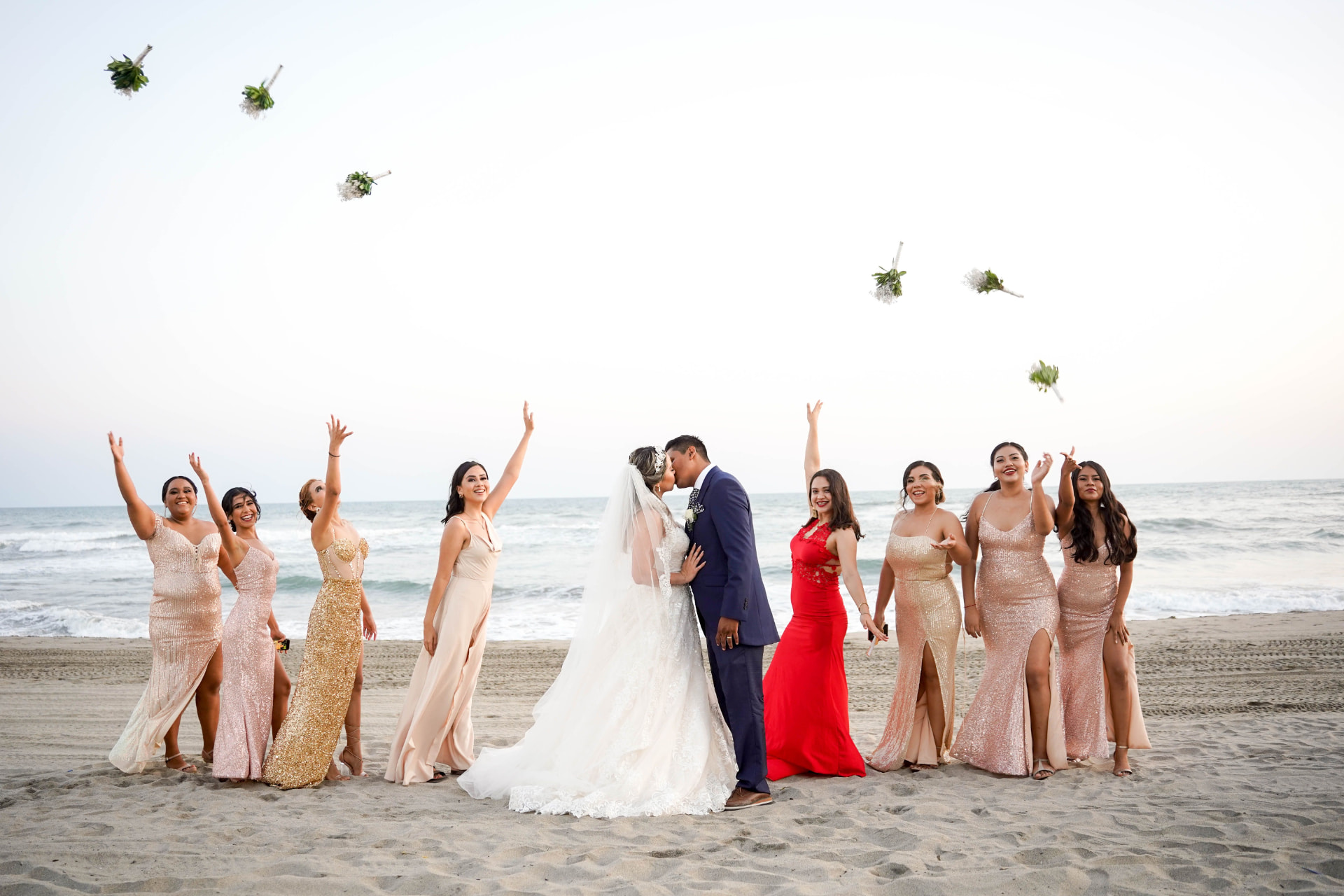
A destination wedding room block is a set of rooms a resort holds for your wedding guests, usually with its own booking process, deadlines and sometimes group pricing. It keeps your guests from competing with regular vacationers for rooms during your wedding week. I've been building these for couples getting married across Mexico and the Caribbean for close to a decade, and the rooms are only half of what actually matters.
What is a destination wedding room block?
A destination wedding room block is inventory a resort sets aside specifically for your wedding guests, tied to your dates and negotiated as part of a group agreement. Depending on the property, it can include specific room categories, group pricing, deposit requirements and booking deadlines. It exists so 50 or 75 guests aren't each independently gambling on availability.
Without a block, some guests book right away and others wait six months, by which point their preferred room type, or the resort itself, may be sold out. The block is what keeps that from happening to your group.

Does a room block mean your guests all stay in the same section?
No. "Block" describes reserved inventory, not a physical location. It doesn't guarantee guests are placed near each other.
I tell couples this early, because it's the most common misconception I run into. Grandma and Aunt Linda being in the same wedding block doesn't mean they'll be next door. Location requests can be made, but final assignments still depend on the resort's own policies and availability at check-in.
How many rooms should a couple block?
There's no fixed formula. It depends on your guest list: how many couples share a room, how many families are bringing kids, how many guests are traveling solo, and how long people are realistically staying.
My rule of thumb is to hold more rooms than you think you'll need going in. Most agreements let you release unfilled rooms before a penalty deadline hits, so overestimating slightly costs you nothing, and underestimating can mean your own guests get shut out of the resort you picked for them.

What's the biggest room block mistake couples make?
The biggest mistake is setting the couple's final payment deadline to match the resort's actual cutoff date. Guests almost always ask for more time, and resorts almost never grant it.
That's why I build a buffer into every room block agreement I set up, putting the couple's internal deadline ahead of the resort's real one. When a guest asks for an extension two weeks before the wedding, it turns into a phone call I make instead of a financial problem the couple has to absorb. It's a small structural decision, and it's the one that saves the most stress in the final month of planning.

Do couples have to pay for their guests' rooms?
Not by default. Guests typically cover their own accommodations unless the couple decides otherwise. What couples are financially responsible for depends entirely on the specific group agreement they've signed, which can include deposits, minimum room commitments or cancellation terms tied to the couple rather than individual guests.
This is exactly why reading the agreement matters more than comparing sticker prices between resorts. Two properties can look identical on price and have very different obligations attached to the block itself.
Is the group rate always the cheapest option?
Not necessarily. Public resort rates shift constantly with promotions and demand, so the lowest number you find online isn't always comparable to what a group agreement offers. A group rate can include terms and concessions, tied to the number of rooms or room nights booked, that a standalone public booking doesn't.
Comparing only the nightly rate you see on a resort's website skips the part of the agreement that usually matters more.
Why does this matter beyond logistics?
Your guests' accommodations shape how easily they participate in wedding events, what they spend, and how smooth their trip feels start to finish. A well-structured room block also means fewer "can I switch rooms" and "can I get an extension" messages landing in your inbox while you're trying to plan the actual wedding.
I've watched this play out the same way across nine years of arranging weddings in Mexico and the Caribbean: couples who treat the room block as a real strategy, not an afterthought, end up with calmer final weeks and guests who feel taken care of instead of confused.
A room block isn't the part of the wedding anyone posts about. It's the part that decides whether the month before your wedding is calm or chaotic.

Let's talk through your guest list, your budget and a room block strategy that actually fits your group. When you're ready to start narrowing down your options, schedule a destination wedding consultation.